teaching

teaching
Showing posts with label Eucharist. Show all posts

Thursday, April 9, 2015

#33. The Offering of the Sacrifice of the Mass. Understanding the Mass and Its Parts.

Now the Light of the Resurrection Illumines the Sacrifice of the Cross

After the Consecration of the Bread and Wine and their transformation into the Risen Body and Blood of Christ in the Eucharist, and after the Memorial Acclamation and Memorial Prayer (proclaiming the Paschal Mystery that Christ has died and risen), next comes the Offering of the Sacrifice of the Mass. This is referred to also the Oblation (from the Latin for "offering a sacrifice").

Recall that at the Consecration Christ is Really Present in his Crucified and Risen Body and Blood, that is, in his entire self. Present also is his Death and Resurrection which is proclaimed after the Consecration. We can say Christ himself is the Oblation: he offered his entire self, body and blood, soul and divinity on the Cross and was wholly raised from the dead in his Resurrection.

In the Mass as we offer what God has given us: the whole Christ, we as members of his Body the Church are also offered to God.


The Sacrifice of the Mass is united to the Sacrifice of Christ on the Cross and his Resurrection. Or we may say, as the Catechism does: "The sacrifice of Christ and the sacrifice of the Eucharist are one single sacrifice" (#1367)

The Priest acting in the person of Christ the Head of his Church is consecrated to make the One Sacrifice of Christ present on the Altar by the word of Christ and the power of the Holy Spirit. (See Catechism #1375 HERE) But the People of God are also present as the Body of Christ the Church. They also offer the Sacrifice of Christ in offering themselves as a "spiritual sacrifice." (See Romans 12:1-2 HERE)

What this means is that the Priest makes present by the Holy Spirit the sacramental Sacrifice of the Eucharist (under the appearance of the Consecrated Bread and Wine). This sacramental Sacrifice is one with the Sacrifice of Christ. Thus the Priest can offer up this sacramental Sacrifice in the form of the Eucharist.   The People of God are a Royal Priesthood in virtue of their Baptism through and with the Priest  also offer their gifts and lives as part of this One sacrifice of Christ.

So the Catechism states:

"The Eucharist is also the sacrifice of the Church. The Church which is the Body of Christ participates in the offering of her Head. With him, she herself is offered whole and entire....In the Eucharist the sacrifice of Christ becomes also the sacrifice of the members of his Body. The lives of the faithful, their praise, sufferings, prayer, and work, are united with those of Christ and with his total offering, and so acquire a new value. Christ's sacrifice present on the altar makes it possible for all generations of Christians to be united with his offering." (#1368)

Is this not beautiful and awesome in its implications for each and all of us? We become part of Chrsit’s One Sacrifice made in love for us. We become part of his love, his self-giving, sacrificial love given for all times. He died once only on the Cross; but his sacrificial love is eternal.


This also why before the beginning of the Eucharistic Prayer, as is permitted, I make a brief exhortation for all present to remember and give thanks to God for all God’s gifts to us. And to offer those gifts and ourselves to be joined to the One Sacrifice of Christ in his Dying and Rising."
 
Again the Catechism states:

"Hence the laity, dedicated as they are to Christ and anointed by the Holy Spirit, are marvelously called and prepared so that even richer fruits of the Spirit may be produced in them. For all their works, prayers, and apostolic undertakings, family and married life, daily work, relaxation of mind and body, if they are accomplished in the Spirit - indeed even the hardships of life if patiently born - all these become spiritual sacrifices acceptable to God through Jesus Christ. In the celebration of the Eucharist these may most fittingly be offered to the Father along with the body of the Lord. And so, worshipping everywhere by their holy actions, the laity consecrate the world itself to God, everywhere offering worship by the holiness of their lives." (Catechism #901)
 
At the Mass, and especially at the Oblation Prayer, we are to offer everything we have and are and experience to be transformed and made part of this Sacrifice of Christ, an expression of love and self-giving in the Holy Spirit. Whatever we do that is not worthy of this Sacrifice, that is sinful and therefore unloving, must be repented and forgiven or healed. This takes most us a life-time. The Eucharist reminds us, Sunday by Sunday, the "standard" by which we are called to live: Christ Jesus who gave himself for us on the Cross in sacrifial love and in his Resurrection we see that this kind of love never ends.


Finally, we do not offer something apart from the Sacrifice of Christ as if we could somehow win favor or merit salvation on our own. No; Christ is the One who offers an acceptable sacrifice to God because he can offer himself totally in God’s love. Our offerings are because of this first love and perfect Sacrifice to which we are united in Baptism and which we express in worship in the Eucharist. Thus the Sacrifice of Christ is the fountain from which we draw the "living water" of the life of Christ and are able to make sacrifices and show love as a result.

Here, then, are examples of these Oblation Prayers in the Four Eucharistic Prayers I-IV in the Roman Rite:

Eucharitic Prayer II
 
"Therefore, as we celebrate
the memorial of his Death and Resurrection,
we offer you, Lord,
the Bread of life and the Chalice of salvation..."

Eucharitic Prayer III

"Therefore, O Lord...
we offer you in thanksgiving
this holy and living sacrifice."

Eucharitic Prayer IV

"Therefore, O Lord...
we offer you his Body and Blood,
the sacrifice acceptable to you
which brings salvation to the whole world."

Eucharitic Prayer I

"Therefore, O Lord...
we, your servants and your holy people,
offer to your glorious majesty
from the gifts that you have given us,
this pure victim,
this holy victim,
this spotless victim,
the holy Bread of eternal life
and the Chalice of everlasting salvation."

A Note on the use of the word "Victim." The original meaning of the Latin word "victim" referred to a living being sacrificed to the gods (or later the One God). Thus a victim in this religious sense referred also to the oblation or the sacrifice itself. Christ, then, is this kind of "victim" in his sacrificial offering of himself.

Since the victim of such a sacrifice suffers death, it is easy to see how the word "victim" came to mean also a person who suffers at the hands of another, unwillingly and oppressed. Jesus was also a victim in this sense, though his act of offering himself was a free one, but the violence shown him was unjust and unwelcome (see HERE)

Next Week: The Prayer for Unity in the Eucharistic prayer.

Tuesday, March 31, 2015

#32 The Memorial of the Passover of Christ & the Offering of the One Sacrifice in the Mass. Understanding the Mass and Its Parts.


This reflection also includes descriptions of the Three Paschal Holy Days which we celebrate this week and which also celebrate the Passover Mystery of Christ.

The entire Mass celebrates the Passover Mystery of Christ (aka the Paschal Mystery; Paschal is the adjective of Passover and of Easter). You may read about the associations of the Jewish Passover which are fulfilled in Christ’s Passover in last week’s reflection (HERE). The entire salvation that God offers to us in Christ Jesus is summed up the central reality of the Paschal Mystery: the Dying and Rising of Christ. Consequently, in union with Christ through Baptism and in following him, we are called to this dying an rising spiritually in this life, and physically in the life of heaven.

The Jewish Passover is a "covenant meal," celebrated once a year For more on "Covenant" see HERE). The Passover of Christ and his New Covenant are celebrated whenever the Mass is celebrated. The Eucharist is the "Paschal Banquet" of the Church. (see Catechism #1323 HERE)

 
On the evening of Holy Thursday Lent ends and the Three Paschal Holy Days begin. This celebration commemorates the Last Supper of Christ with his disciples and the gift of his Eucharist to us. The First Reading of this liturgy recalls the Passover of the Israelites. The Gospel proclaims: "Before the feast of Passover, Jesus knew that his hour had come to pass from this world to the Father. He loved his own in the world and he loved them to the end." (John 13:1)

At the last Supper, which anticipates his Death and Resurrection. The Eucharist remembers how Jesus loves us, summed up in a new commandment: "Love one another as I have loved you." (John 13:34) This is a sacrificial love and a love that serves as Jesus demonstrates in washing the feet of his disciples, an act of a servant. The Church uses the details of John 13 to proclaim the meaning of the Eucharist for all times through the ministry of Priests and the participation of the entire Church.

After the Consecration at Mass, the Eucharistic Prayer has a Memorial Acclamation (the "Mystery of Faith") and continues with what is called the Memorial of the Paschal Mystery (technically called by its Greek name "anamnesis") and the Offering of the One Sacrifice of Christ in the Mass.

The Memorial is the Spirit-filled remembrance that really makes present the Death and Resurrection of Christ in the Eucharist. In a way this Memorial Prayer is revealing the meaning of the words of Jesus in the Consecration.

Every Eucharistic Prayer has a specific Memorial prayer of the Paschal Mystery. Every Eucharistic Prayer also has the Offering of the One Sacrifice on the Cross and Christ’s Resurrection made sacramentally present on the Altar. (This "offering’ should not be confused with the "Offertory" which occurs before the Consecration and is preparing the gifts of bread and wine for Consecration and Offering)


There are three options for the Memorial Acclamation, the "Mystery of Faith," after the Consecration:

1. "We proclaim your Death, O Lord,
      and profess your Resurrection
      until you come again."

2. "When we eat this Bread and drink this Cup,
     we proclaim your Death, O Lord,                     [the Resurrection is implied]
     until you come again."

3. "Save us, Savior of the world,
    for by your Cross and Resurrection
    you have set us free."

The Memorial Prayer of Eucharistic Prayer III is quite good as a summary of what we are doing in the Mass:

"Therefore, O Lord,
as we celebrate the memorial
of the saving Passion of your Son,
his wondrous Resurrection
and Ascension into heaven,
and as we look forward to his second coming,
we offer you in thanksgiving
this holy and living sacrifice."


Holy Thursday is actually a vigil for Good Friday and calculating time in the Jewish manner, i.e. where a day is calculated as including the evening before, Holy Thursday and Good Friday make one day, the First Day of the Paschal Three Days.

It is fitting that the evening of Holy Thursday and Good Friday are linked together. The Lord Jesus gave us the new commandment to love one another on Holy Thursday evening at his Last Supper. This love, which is sacrificial and all-giving, is demonstrated by his Passion and Death on the Cross:

"[S]ince he was about to offer himself on the cross to save us, he wanted us to have the memorial of the love with which he loved us ‘to the end,’ even to the giving of his life. In his Eucharistic presence he remains mysteriously in our midst as the one who loved us and gave himself up for us, and he remains under signs that express and communicate this love..." (Catechism #1330)

On Good Friday we have the Veneration of the Cross whereby we embrace the sacrificial love of Christ in our lives which the Cross represents, even if we may have to suffer as he did in this life. We would normally have this Veneration of the Cross at 3pm on Good Friday (the hour Christ died; see Matthew 27:45). However, so that more people can attend the Good Friday Service we have it at 7pm at Holy Faith.

The Son of God could not have suffered and died for us on the Cross if he had not taken our flesh and was born of the Virgin Mary. He is thus fully God and fully human. He came to die for our sins and as a result of our sins. Thus he suffered our greatest suffering: our experience of death and its loss. Then he was buried in the Tomb.

 
The Second Day of the Paschal Three Days is Holy Saturday. No Liturgy is celebrated on this day, except Morning Prayer, because on "Holy Saturday the Church is, as it were, at the Lord's tomb, meditating on his passion and death, and on his descent into hell, and awaiting his resurrection with prayer and fasting." (Paschales Solemnitatis #73) This is a day for deep silence and reflection, pondering all the times in life when everything seems "dead and buried."

 
There is no Cross without the Resurrection and no Resurrection without the Cross. In times past the Church focused more on the sacrifice of Christ on the Cross present in the celebration of the Mass and not so much on the Resurrection of Christ. The Memorial of Christ’s Paschal Mystery after the Consecration is a constant reminder of the unity of Christ’s Death and Resurrection.

What role does the Resurrection have in the Christian life? It is the promise and experience of transformation in our lives. It is a radical newness, what St. Paul calls "a new creation." It is in the spiritual sense the promise that darkness will give way to light, death will give way to life, sorrow will give way to joy. Since the Cross tells us that Christ died for us out of sacrificial love,

the Resurrection tells us that this sacrificial love never ends, for Chris himself did not come to an end at his death, and neither shall we.

As one author asserts: "And it is what Jesus’ resurrection means that really matters. For what it means is that if Jesus rose from the dead, so will we. If he overcame the trials, sufferings and hardships of his life, so will we. As he left his tomb, so too can we leave our tombs of sadness, loneliness, addiction, abuse, depression, anger, anxiety, worry, jealousy, envy, and whatever else weighs us down in our daily lives. As Jesus tells us in Scripture: ‘Have courage, I has overcome the world.’" (From Catholic Webprofessor)

 
The Third Day of the Paschal Three Holy Days is the close of Holy Saturday with the night celebration of the Easter Vigil and the start of Easter Sunday.

The Easter Vigil is unique of all the liturgies of the Church. It is reminiscent of the night vigils of the early Church when Christians would gather and light the night lamps and read Scriptures and await the coming of the Lord Jesus.

At the Easter Vigil we light the Paschal Candle which represents Christ our Light. We bring it into the darkened church and light the candles of the Assembly. An ancient hymn is sung (the Exultet) introducing this Vigil. We then hear a number of Scripture readings about creation and salvation, including about Baptism and then the Resurrection of Christ from the dead.

On this night we baptize adults and older children who have been preparing for this. We Confirm them and share the Eucharist with them for the first time. It is a night of joy, to say the least and of great beauty.

The following morning at dawn, the Mass of the Resurrection is celebrated. It was early before dawn that Christ rose from the dead. Other Easter morning Masses follow. As on the night before at the Easter Vigil, the People gathered for the Easter Masses renew their Baptismal promises and also unite with the risen Christ in the Eucharist.

Next Week: The Offering of the One Sacrifice of Christ in the Mass in more detail.

Return to Home Page

Thursday, March 26, 2015

#31 The The Mass, the Jewish Passover and Christ’s Passover. Understanding the Mass and Its Parts.


As we pause to learn more about the Consecration of the Mass, we look at how the Jewish Passover influenced the early Church and its celebration of the Eucharist, instituted at the last Supper. This subject of the Passover will also be further examined in this series next week when we look at how the Mass proclaims and re-presents the Paschal Mystery for the life of each Catholic and the Church.
 
At present we can note that the Eucharist is described in the Catechism of the Catholic Church as "a Paschal banquet," (#1323 HERE) i.e. a Passover banquet, Paschal being the adjective of Passover. The Eucharist is described as the "sacrament of Christ’s passover" (Catechism #1517 HERE) and its "memorial." As Catechism #1365 teaches us:
 
"Because it is the memorial of Christ's Passover, the Eucharist is also a sacrifice. The sacrificial character of the Eucharist is manifested in the very words of institution: ‘This is my body which is given for you’ and ‘This cup which is poured out for you is the New Covenant in my blood.’ In the Eucharist Christ gives us the very body which he gave up for us on the cross, the very blood which he ‘poured out for many for the forgiveness of sins.’"


It is Christ's Passover
 
We should note that the Catechism continuously speaks about "Christ’s Passover" or "his Passover." The Jewish Passover was influential in the life of Christ and for the early Jewish Christians, but from the time of the New Testament the Christian Passover was distinguished form the Jewsish feast. Many of the ancient themes of the Jewish Passover were fulfilled by Christ who gave us a New Passover in the New Covenant. Just as the Jewish Sabbath has been superceded and fulfilled by Sunday, the Lord's Day for Christians, so the jewish passover has been superceded and fulfilled by Christ's Passover.
 
Meaning of the Jewish Passover
 
What does the Jewish Passover celebrate and what is its meaning still today for the Jewish People? It begins with the Covenant that God made with the Patriarch Abraham (see Genesis 17:3-9 HERE). God promised that Abraham and his future descendents would be given a land (the "Promised Land") and they would be chosen to bless all the nations.
 
After many generations the descendents of Abraham would become enslaved in Egypt and cruelly oppressed. God heard the cry of his People and saw their suffering and so raised up a leader who could take them back to the Promised Land.
 
 
First, however, Moses had to persuade Pharoah to let God’s People go free. Pharoah’s heart was hardedned againt the Hebrews. God sent plagues upon Egypt and finally the death of all the first-born sons of Egypt to persuade Pharoah. The Hebrew families were told each to slaughter a lamb and eat it in a religious meal, also marking the doors of their homes with the blood of the Paschal lamb so that the angel of death would "pass over" the Hebrews and spare their first-born sons.
 
So the People of God were finally freed. They passed through the Red Sea as on dry land and entered the desert for 40 years. They came to Mt. Sinai where God made a Covenant and promised the Hebrews to be their God and they would be his People, and they would keep this Covenant through observing the Sabbath and the commandments of the Lord. Eventually, the People were led into the Promised Land (currently modern day Israel).
 
Themes of the Jewish Passover
 
The Jewish Passover celebrates a number of salvation themes: being saving from death; the freedom from the slavery of Egypt; the overcoming of darkness by light; the Covenant whereby the Israelites became a Chosen People; and their mission to the rest of the world to proclaim God’s mighty works to save. The Passover Meal celebrates all this with the recounting of the events of the Exodus while having a covenant meal together.
 
Examples of Paschal Themes in the New Testament
 
The New Testament (= New Covenant) describes the salvation god gives us in Christ in many of these same "Paschal images":   "For you were formerly darkness, but now you are Light in the Lord; walk as children of Light." (Ephesians 5:8); “For freedom Christ has set us free. Stand firm, therefore, and do not submit again to a yoke of slavery (Galatians 5:1); "Christ is the mediator of a new covenant, that those who are called may receive the promised eternal inheritance--now that he has died as a ransom to set them free from the sins committed under the first covenant." (Hebrews 9:15); "But you are a chosen people, a royal priesthood, a holy nation, God's special possession, that you may declare the praises of him who called you out of darkness into his wonderful light." (1 Peter 2:9; compare to Exodus 19:5-6 HERE)

Certainly the early Church certainly interpreted Jesus death and Resurrection in Passover terms and we see parallels in the New Testament with the themes of the Jewish Passover at the time. For example one source notes:
 
"The Passover is an important foreshadowing in God’s plan of salvation. There are many parallels between the Passover and Christ’s saving work...In both cases God raises up a savior to lead [God’s people] to freedom: Moses and Jesus Christ. In both cases the people are given a new code of life: the Ten Commandments and the Beatitudes. In both cases they are saved by the shedding of innocent blood: the Paschal Lamb’s and Christ’s. In both cases the savior leads the people from one state to another: from being slaves in Egypt to being free in the Promised Land and from being slaves to sin to being free from sin [in Christ]." (Form "Passover" © 2010 by Saint Mary’s Press in the Living in Christ Series.


The Last Supper (and thus the Eucharist) has a "Paschal Character"
 
It was with this background of the Passover, that Jesus celebrated a "farewell meal" with his disciples, the Last Supper. There is much debate about whether the Last Supper was a Passover meal or not. Part of the problem is that the Gospels of Mark, Matthew and Luke can be interpreted as saying the Last Supper was a Passover meal; but the Gospel of John has Jesus dying on the Cross at the precise moment that the Passover lambs were being sacrificed in the Temple (the "ninth hour" or 3pm). That would mean according to John’s chronology that it was impossible for Jesus and the disciples to have shared a Passover meal, since  the Passover meal would have started the night of Good Friday (the lambs had to be sacrificed first in the Temple and then taken home by each family for the evening Passover).
 
To me a great deal of confusion can be avoided if we remember that Jesus was celebrating his Passover in the Last Supper meal, a meal that would be somewhat similar to the Jewish Passover meal but also different since it was the beginning of the Eucharist for all time. It was and is the Lord’s Supper, his Passover in the New Covenant. (If interested to read a scholaly discussion of the "problems" of whether the Last Supper was a Jewish Passover meal, see the comments made by Pope Benedict XVI HERE).
 
In fact St. Paul writes to the Corinthian church: "For Christ our Passover has been sacrificed; Therefore, let us celebrate the feast." (1 Corinthians 5:7b-8a) Listen attentively for how the Passover is referenced in the upcoming Palm Sunday liturgy and the Triduun for next week.
 
 
Next Week: The Paschal Mystery of Christ Proclaimed in the Triduum and in the Mass.


Thursday, March 5, 2015

# 28 The Real Presence of Christ in the Eucharist. Understanding the Mass and Its Parts.

It is the Glorified and Risen Christ
in the Eucharist

Last week I wrote about the Epiclesis (calling upon the Holy Spirit) and the Consecration of the bread and wine in the Eucharist. I wrote:
 
"The ancient understanding of the Mass is that the Risen and Glorified Christ is Really Present in the worship under the appearances of bread and wine that have been duly consecrated. There is a wondrous transformation of the ordinary bread and wine where the Risen Christ becomes present in a way he was not before the Consecration."
 
I also noted the teaching of the Catechism (#1333): "At the heart of the Eucharistic celebration are the bread and wine that, by the words of Christ and the invocation of the Holy Spirit, become Christ's Body and Blood." (#1333)
 
The sacramental presence of the Crucified and Risen Christ through the bread and wine after the Consecration is called his Real Presence. By this we mean it is not a symbolic presence only, or psychological (in our mind only), or an imagined presence, or present only spiritually, if by spiritually we wrongly mean "only figuratively, or ‘not quite really.’"
 
The Catholic Church teaches and believes that the Risen Christ is really and entirely present under the appearances of consecrated bread and wine: "In the most blessed sacrament of the Eucharist ‘the body and blood, together with the soul and divinity, of our Lord Jesus Christ and, therefore, the whole Christ is truly, really, and substantially contained.’" (CCC#1374)
 
Over the centuries, many in the Church have tried to explain how it is that the bread and wine are changed to become really the Body and Blood of Christ. The Church has favored an explanation called "transubstantiation" ( a change, trans-, of substance). The term "substance" is used in a very philosophical way, meaning "essence," what a thing is (esse). One can see the challenge of saying the bread and wine are the Body and Blood of Christ when after the Consecration bread and wine are still there on the Altar.
 
But according to the idea of transubstantiation the appearances of the bread and wine, that is, the physical properties of bread and wine, do remain after the Consecration, but the very essence or reality of the bread and wine are replaced (changed) by the essence and reality of the Crucified and Risen Christ. The Eucharist is the only time such a thing happens, and ultimately, this is a mystery.
 
 
To say that Christ is also bodily present under the appearances of the Consecrated bread and wine has to also be understood carefully. It is the Risen and glorified Christ who is Really Present. In other words, his is not a physical reality like that in time and space here on earth (or throughout the universe). Some have proposed the word "transphysical" to describe the Risen Body and Blood of Christ (For an extensive reflection of mine on this go HERE). The Body of Christ "is present in the eucharist not in the usual, natural, visible, local ways bodies are normally present, but rather in a spiritual, non-visible, substantial and sacramental manner." (Nathan Mitchell, Real Presence, p.100).
 
So what we see and taste in the Consecrated bread and wine are the physical properties of bread and wine, but the true reality we receive is not bread and wine but the Crucified and Risen Body and Blood of Christ. Also, we do not receive only part of Jesus in the Eucharist. We receive the whole Christ, his whole reality, "body and blood, soul and divinity."
 
In the ritual practice of the Mass, it is only after the bread is Consecrated that the Priest shows the Host for adoration and genuflects, not to bread which would be absurd, but to Christ Really Present, and the same for the Consecrated wine. The elements which we now call the Body and Blood of Christ must be handled with the greatest care and reverence and will be given as Communion in the Mass. Some of the Consecrated bread will be reserved in the Tabernacle for the Sick and we genuflect whenever we pass by the Tabernacle. Thus we express our belief in the Real Presence of Christ in the Eucharist.
 
Next Week: The Four actions mentioned in the Consecration.
 

Thursday, February 26, 2015

#27 The Epiclesis and the Consecration. Understanding the Mass and Its Parts.

 
Jesus instituted the Eucharist at the Last Supper


The ancient understanding of the Mass is that the Risen and Glorified Christ is Really Present in the worship under the appearances of bread and wine that have been duly consecrated. There is a wondrous transformation of the ordinary bread and wine where the Risen Christ becomes present in a way he was not before the Consecration.
Thus Christ, through the ministry of the ordained Priest, truly offers his Body and Blood (his entire self) in his One eternal Sacrifice, sacramentally through the Consecrated Bread and Wine.

How is the bread and wine transformed through the ministry of the ordained Priest for the benefit of all who offer themselves with Christ in the Eucharist? The Catechism teaches that "At the heart of the Eucharistic celebration are the bread and wine that, by the words of Christ and the invocation of the Holy Spirit, become Christ's Body and Blood." (#1333)

The ordained Priest, by virtue of his ordination, is given a permanent role to represent Christ the High Priest and the Head of the Church (the supreme expression of this role is that of the Bishop). The Priest through his ordination is invested with a "sacred power" (an authority and service) to consecrate the bread and wine in the Eucharist to become Christ’s Body and Blood.

However, this "power" is accomplished by the Holy Spirit and the words of Christ which he spoke at the last Supper ("...this is my Body...this is my Blood...").

 
I. The Epiclesis

After the Sanctus is sung (and in the United States the Assembly kneels) there are a few words that serve as a transition to the Epiclesis. Epiclesis is a Greek word meaning "to call upon or from above," thus "to invoke," in this case the Holy Spirit. The Priest extends his hands over the bread and wine to be consecrated. This signifies the coming of the Holy Spirit by whose power Christ the High Priest will transform the bread and wine.


This gesture of the Bishop or Priest extending hands over some thing or person is a type of "laying on of hands" whereby the Holy Spirit comes to act upon that thing or to act in that person. Thus there is an epiclesis also in Confirmation, in Ordination, and in the Anointing of the Sick and in the Sacrament of Reconciliation when one goes "face to face" with the minister.

With the Eucharistic Epiclesis the Priest also makes the Sign of the Cross over the bread and wine when it is indicated. Thus in Eucharistic Prayer III the Priest prays:

"Therefore, O Lord, we humbly implore you: by the same Spirit graciously make holy these gifts we have brought to you for consecration, that they may become the Body and + Blood of your Son our Lord Jesus Christ at whose command we celebrate these mysteries."

We should remember a principle stated in the Catechism: "When the Father sends his Word, he always sends his Breath." (#689). The Word is Christ Jesus and the Breath is the Holy Spirit (note the play on words: the breath carries the spoken word, so the Spirit brings Christ and Christ comes with the Spirit). We are accustomed to believe that we receive Christ in the Eucharist; we also receive the Holy Spirit anew in the same Eucharist.


II. The Consecration

The act of Consecration signifies a dedication and a making holy. The words of Jesus spoken at his last Supper are given in a "Eucharistic version" and repeated by the Priest over the bread and the wine. Since it was at the Last Supper that Jesus instituted (i.e. established) the Eucharist to be done in his memory, this moment of the Mass is also called "the Institution Narrative."

The function of the Consecration as discussed earlier is to bring about the transformation of the bread and wine to become the Risen Body and Blood of Christ in the manner of a sacrament. But these words also tell God why we are doing what we are doing in the Eucharist. In the course of telling God we are also being reminded of why we do what we do.

There is always some short introduction to the words of Consecration. Thus in Eucharistic prayer III the Priest says:

"For on the night he was betrayed he himself took bread, and giving you thanks he said the blessing, broke the bread and gave it to his disciples, saying:..."

As the priest is saying the introduction, he takes the bread (a Host, from Latin for sacrifice or that which is sacrificed) in his hands and then when saying the words of Consecration he bows slightly (in reverence) and says:

"...TAKE THIS, ALL OF YOU, AND EAT OF IT: FOR THIS IS MY BODY WHICH WILL BE GIVEN UP FOR YOU."

The Priest elevates the Host slightly above the altar so that those present may adore Christ Really Present." Then putting the Host back on the altar, he makes a sign of reverence by genuflecting (going down on one knee and then rising back up). The People are already kneeling after the Sanctus.


Then he introduces the Chalice filled with wine. Again in Eucharistic Prayer III:

 "In a similar way, when supper was ended, he took the chalice, and giving you thanks he said the blessing, and gave the chalice to his disciples, saying..."

The Priest takes up the Chalice of wine while saying this and then again bowing slightly says:

"TAKE THIS, ALL OF YOU, AND DRINK FROM IT: FOR THIS IS THE CHALICE OF MY BLOOD, THE BLOOD OF THE NEW AND ETERNAL COVENANT; WHICH WILL BE POURED OUT FOR YOU AND FOR MANY FOR THE FORGIVENESS OF SINS. DO THIS IN MEMORY OF ME."


He lifts the Chalice slightly above the altar so that the People may adore Christ. The Priest genuflects after showing the Chalice.

III. Who is Addressed in the Consecration?
 
We must remember who is being addressed in this Institution Narrative. It is God the Father who is being addressed. Some Priests will take the bread and while they are saying the introduction to the Consecration they show the bread from right to left or left to right to the Assembly, obviously saying the words to the Assembly. The words "gave it to his disciples" is being used to include those in the pews, as the Priest says these words to them.

First, there is nothing in the guidelines of the Mass which says "At the Consecration, address the Assembly and show them the bread (or Chalice) while doing this." If the Assembly is being addressed in this introduction, then the words "and when he was giving you thanks" would mean he thanked his disciples! Then is the Consecration also addressed to the Assembly? If the Priest follows the guideline to bow at these words, then at least that mistaken possibility is avoided (no eye contact with the Assembly).

Instead, the Priest is addressing God in the Institution Narrative. He relates how Jesus gave God thanks and what he did with the bread and wine. We are telling God what God already knows! But this is the way we are to pray. Let me expand what is done in this way:

As the priest takes the bead  it is as if he is saying: "Father, we do this Eucharist because, as you know, on the night Jesus was betrayed he took bread and thanked you and blessed it and broke it and said, ‘...TAKE THIS, ALL OF YOU, AND EAT OF IT: FOR THIS IS MY BODY WHICH WILL BE GIVEN UP FOR YOU.’"

The Priest prays a similar meaning with the Chalice, only adding "[Jesus said:] Do this in memory of me. And so we are doing this in his memory, Father."

Of course, as we tell God these things, we also are remembering it ourselves. The Eucharistic Prayer, as one revered liturgist said, is"both prayer and proclamation."


In the following weeks I want to explore some matters connected to the Epiclesis and Consecration, such as the teaching on the Real Presence of Christ in the Mass, the four actions of the Eucharist (take, give thanks/bless, break/give and eat/drink), the Paschal Mystery, and how the word "Memory" is used in the Consecration.

Next Week: The Real Presence of Christ in the Eucharist.


Thursday, February 19, 2015

# 26 The Sacrifice of the Mass. Understanding the Mass and Its Parts.


The Mass re-presents the One Sacrifice of Christ on the Cross which also includes his Resurrection from the dead. There is no Cross without the Resurrection and there is no Resurrection without Christ’s death on the Cross. His Dying and Rising are called his Paschal Mystery or Passover Mystery.

Catechism #654: "The Paschal mystery has two aspects: by his death, Christ liberates us from sin; by his Resurrection, he opens for us the way to a new life."

The meaning of Christ’s Sacrifice is the total gift of himself in Divine and Human love to God the Father for our salvation. As humans we had sinned and still do. Sin is the refusal to love as God loves; our healing is the superabundance of Christ Jesus’ love offered on the Cross and "this love is poured out into our hearts by the Holy Spirit, whom God has given us." (Romans 5:5) Therefore Christ’s Death and Resurrection saves us through the forgiveness of sins. It is this love shown on the Cross which the Resurrection reveals will never end.

Catechism #616: "It is love ‘to the end’ that confers on Christ's sacrifice its value as redemption and reparation, as atonement and satisfaction. He knew and loved us all when he offered his life [on the Cross]."


It takes a life-time (including eternal life) to comprehend these "mysteries" of the Cross and Resurrection and the love re-presented to us through the sacraments. (A sacrament is a visible sign of the invisible life of Christ and the grace he gives us to share in his life). It is in the sacramental celebration of the Mass that we have "primary contact" with the Dying and Rising of Christ. We are united to Christ’s One Sacrifice in the Mass.

But how does the Mass unite us to the One Sacrifice of Christ? How can we say the Mass is a sacrifice when there is only One Sacrifice of Christ? If the Mass is the sacrament of this One Sacrifice, how is this Sacrifice made visible in the way sacraments make visible something which is invisible?

It is easy to misunderstand the Teaching of the Church about "the sacrifice of the Mass." The Mass is a sacrifice, but what it is re-presenting is the One Sacrifice of Christ.

Catechism #1104: "Christian liturgy not only recalls the events that saved us but actualizes them, makes them present. The Paschal mystery of Christ is celebrated, not repeated. It is the celebrations that are repeated, and in each celebration there is an outpouring of the Holy Spirit that makes the unique mystery present."

Christ is not eternally dying on the Cross, but historically his offering of himself on the Cross was the way he made visible at the time his act of total love and worship of the Father. Now he is Risen from the dead and ascended to heaven where he continues to offer his humanity in love to God in the Spirit. Nothing has to be made visible in heaven; but here on earth we still need a visible expression of the One Sacrifice and that is what the Sacrament of the Mass does.

Catechism #614: "This sacrifice of Christ is unique; it completes and surpasses all other sacrifices."

 
Let us look at this more closely because in our day we don’t always appreciate the sacrificial nature of the Mass:

(1) A sacrament makes Christ’s life visible. The visible or physical elements of the Eucharist are the Bread and Wine offered in the Mass. Through the Consecration of the Bread and Wine the Risen Body and Blood of Christ become Really Present on the altar. As Christ gave himself to us on the Cross, so he gives himself to us in the Sacrament of his Body and Blood.

(2) There are words that always accompany a sacrament. In this case the words are those of Christ at the Last Supper: "This is my Body which will be given for you...this is my Blood which will be shed for you..." The Priest repeats a version of these words. Notice that the words of Christ are sacrificial language: his body given, his blood shed.

(3) There is also an action that accompanies a sacrament. In this case in the Mass it is Christ himself, acting through the ministry of the Priest, who offers his One Sacrifice, the Gift of his life and love. In the Sacrament of his Sacrifice in the Mass, Christ personally gives himself and his life and love to us and for us, for our salvation. He still says, as he said at the last Supper, "Take and eat this, this is my Body...Take and drink this, this is my Blood..."

(4) A sacrament gives us grace, i.e. a share in the life of Christ in his union with God the Father and God the Holy Spirit. A sacrament unites us to the life of Christ. In the case of the Mass, we are given grace to make our own self offering, to be united to the One Sacrifice of Christ.

Catechism #1368: "In the Eucharist the sacrifice of Christ becomes also the sacrifice of the members of his Body. The lives of the faithful, their praise, sufferings, prayer, and work, are united with those of Christ and with his total offering, and so acquire a new value. Christ's sacrifice present on the altar makes it possible for all generations of Christians to be united with his offering."

(5) Finally, a sacrament reminds us how we are to live in Christ. In Mass, we are reminded that we are called to share Christ’s sacrificial love in this world. We are members of his Body the Church and he said at the Last Supper, "A new commandment I give you: love one another as I have loved you." (John 13:34) Thus there is a secondary sign made visible at the Mass: His Body the Church. He gives us his Body and Blood in the Mass so that we can be his Body the Church, his Family (his Blood or kin). We are then to make his love visible in the world.


Next Week: "The Consecration of the Eucharist."

Return to Home Page

Thursday, February 12, 2015

#25 Joining the Heavenly Liturgy in the Sanctus (Holy, Holy, Holy) of the Eucharistic Preface.


At the conclusion of each Eucharistic Preface is a call for us to join in the Heavenly Liturgy of Christ and his angels and his saints. This is the worship that goes on in heaven. We join in the angelic hymn of praise described by the Prophet Isaiah in his vision of heaven:
 
"I saw the Lord seated on a throne, high and exalted,
and the train of his robe filled the temple. 
 
Above him were seraphs, each with six wings:
with two wings they covered their faces,
with two they covered their feet, and with two they were flying. 
 
And they were calling to one another:
‘Holy, holy, holy is the LORD Almighty;
the whole earth is full of his glory.’ " (Isaiah 61-3)
 
The author of the Book of Revelation had a similar vision of the seraphim and their song:
 
"Each of the four living creatures had six wings and was covered with eyes all around,
even under its wings. Day and night they never stop saying:
‘Holy, holy, holy is the Lord God Almighty,
who was, and is, and is to come.’" (Revelation 4:8)
 
 
We echo this angelic song on earth in every Mass with what is commonly termed "The Sanctus" (Latin for Holy). The Sanctus is introduced within the Eucharistic Preface with reference to the angelic hosts and heaven itself. For example, this reference in a Eucharistic Prayer for Feasts of Mary:
 
"Through him [Christ] the Angels praise your majesty,
Dominions adore and Powers tremble before you.
Heaven and the Virtues of heaven
and the blessed Seraphim worship together with exultation.
May our voices, we pray, join with theirs in humble praise, as we acclaim:
 
Holy, Holy, Holy..."
 
I particularly like the Orthodox Church’s Liturgy of St. John Chrysostom with this introduction to the angelic hymn:
 
"For all this we give thanks, for all things known and unknown,
all benefits manifest and hidden... and also this Liturgy,
which God deigns to accept from our hands,
though before Him stand thousands of archangels
and myriads of angels, cherubim and seraphim,
six-winged, many-eyed soaring aloft on their wings,
singing, crying out and shouting the triumphal hymn:
 
Holy, Holy. Holy..."


In the Roman Rite the Sanctus quotes Isaiah 6:3, but adds the word "heaven," and also a reference from Matthew 21:9. Thus:
 
"Holy, Holy, Holy Lord God of hosts,
Heaven and earth are full of your glory:
Hosanna in the highest.
Blessed is he who comes in the name of the Lord.
Hosanna in the highest."
 
Here is a perfect hymn for us to join in heaven, and a foreshadowing of the coming of the Lord Jesus in the Eucharist.
 
 
The Sanctus brings us into the very precincts of heaven. With Christ and through him we offer worship in heaven as on earth. There, in heaven, he offers himself in an eternal offering of worship and love to God, with all his glorified members: the Virgin Mary and all the saints, accompanied by the angelic hosts. This is the "heavenly liturgy""It is in this eternal liturgy that the Spirit and the Church enable us to participate whenever we celebrate the mystery of salvation in the sacraments." (CCC1139).
 
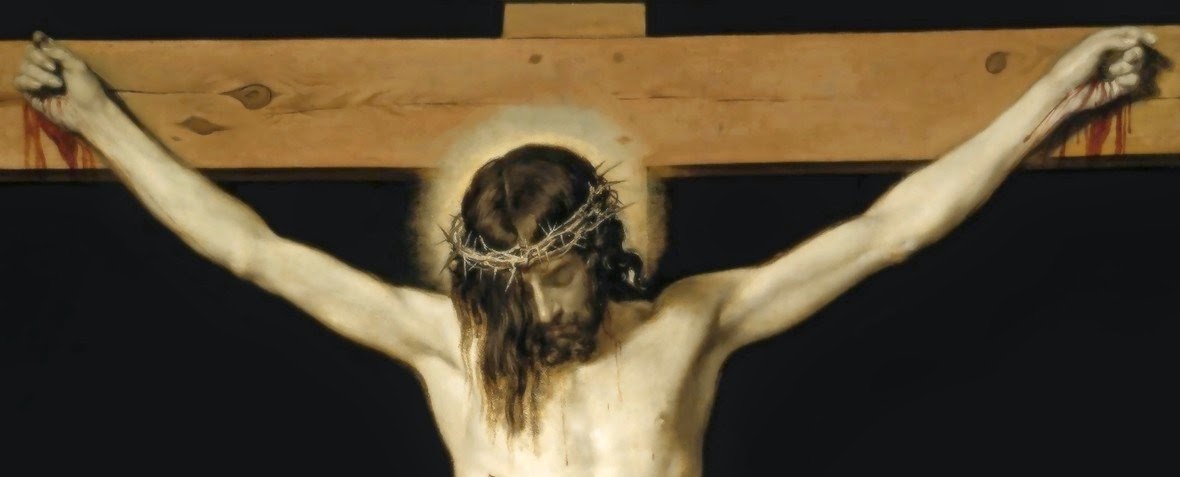
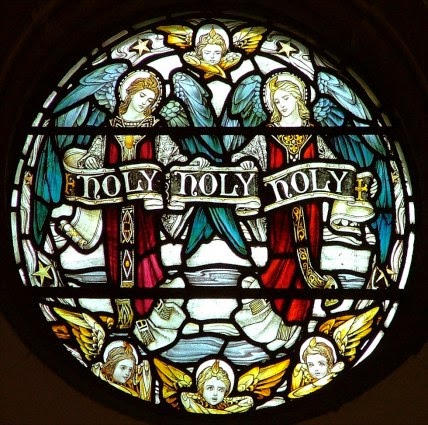
We are also reminded of our union with heaven in the devotional decorations of the church. For example, flanking the Crucifix in our parish church are the panels of Mary and St. John. An icon of the Risen Christ is at the back of the Church. Above are angel banners. In two upper corners of the church are large banners of St. Joseph and the Madonna. And lo and behold, the stain glass windows near the sanctuary have those seraphim, the six winged angels, whom we join in their eternal hymn.
 
Next week: The Sacrifice of the Mass


Thursday, February 5, 2015

#24. What We Give Thanks For in Mass. The Eucharistic Prayer. Understanding the Mass and Its Parts.


In my last post I wrote how the Mass calls us to a lifestyle of gratitude, thankful for the gifts God has given us in love. We hear in the opening Dialogue of the Preface of the Eucharistic Prayer the Priest say "Let us give thanks to the Lord our God." The People say "It is right and just." I wrote how then the Preface prays to God: "It is truly right and just, our duty and our salvation, always and everywhere to give you thanks, Lord, holy Father, almighty and eternal God, through Christ our Lord."
 
What follows in the Preface is itself a thanksgiving to God which is why the Preface is also called the Thanksgiving. What this Preface does is give the reasons why we thank God, for what we thank God. We must also understand that the Priest is praying both for the Church and with the Church and also proclaiming the reasons for thanksgiving. Notice that after the Opeing Dialogue of the Eucharistic Prayer, which is an exchange between the Priest and People, the Preface next speaks to God (as "Lord, holy Father, almighty and eternal God").
 
The Thanksgiving Preface follows the ancient Jewish pattern of prayer where (1) one invokes God, then (2) gratefully proclaims what God has done, typically in creation and in the saving deeds of God and then (3) makes petition to God. The Jewish pattern of prayer, then, first praises and thanks God and then asks for something.


In the Thanksgiving of the Preface we (the Church) go on to state the reasons we thank God in this Eucharist (root word means "thanksgiving"). I also wrote last week a suggestion in preparing for Sunday Mass that we make a list (on paper, or digitally or mentally) of the things we want to thank God for in the Thanksgiving of the Eucharist.


When the Thanksgiving is prayed in the Preface, we unite our personal thanks (silently) to the "cosmic thanksgiving" of Christ himself. We join our thanks to the Liturgy’s thanksgiving typically for creation and for the Paschal Mystery of Christ. The Paschal Mystery refers to the entire life of Christ lived for us and now in us: "Christ enables us to live in him all that he himself lived, and he lives it in us." (Catechism #521)
 
You may read more about the Paschal Mystery HERE, but the essence of the Mystery is the Death and Resurrection of Christ and his Coming again in glory.
 
Consider this Preface of Eucharistic Prayer II which focuses upon both creation and the Paschal Mystery:
 
"It is truly right and just, our duty and our salvation,
always and everywhere to give you thanks, Father most holy,
through your beloved Son, Jesus Christ,
your Word through whom you made all things,
whom you sent as our Savior and Redeemer,
incarnate by the Holy Spirit and born of the Virgin.
Fulfilling your will and gaining for you a holy people,
he stretched out his hands as he endured his Passion,
so as to break the bonds of death and manifest the resurrection."
 
Common Preface V (one of the prefaces that can be used on Week days) states the Paschal Mystery in its simplest summary:
 
"His Death we celebrate in love,
his Resurrection we confess with living faith,
and his Coming in glory we await with unwavering hope."
 
The Eucharistic Preface sometimes focuses on some aspect of the Paschal Mystery/life of Christ which is celebrated in one of the Liturgical Seasons of Advent, Christmas, Lent or Easter. For example, this is a Christmas Preface we pray:
 
"For in the mystery of the Word made flesh
a new light of your glory has shone upon the eyes of our mind,
so that, as we recognize in him God made visible,
we may be caught up through him in love of things invisible."


By having our often humble thanks united to the Great Thanksgiving of the Eucharist, we are "elevated," our hearts truly are lifted up the Lord, and we are given a very dignified role of joining heaven’s eternal Thanksgiving as we will see in next week’s post about the Sanctus.
 
Next Week: Joining the Heavenly Liturgy in the Sanctus (Holy, Holy, Holy) of the Eucharistic Preface.